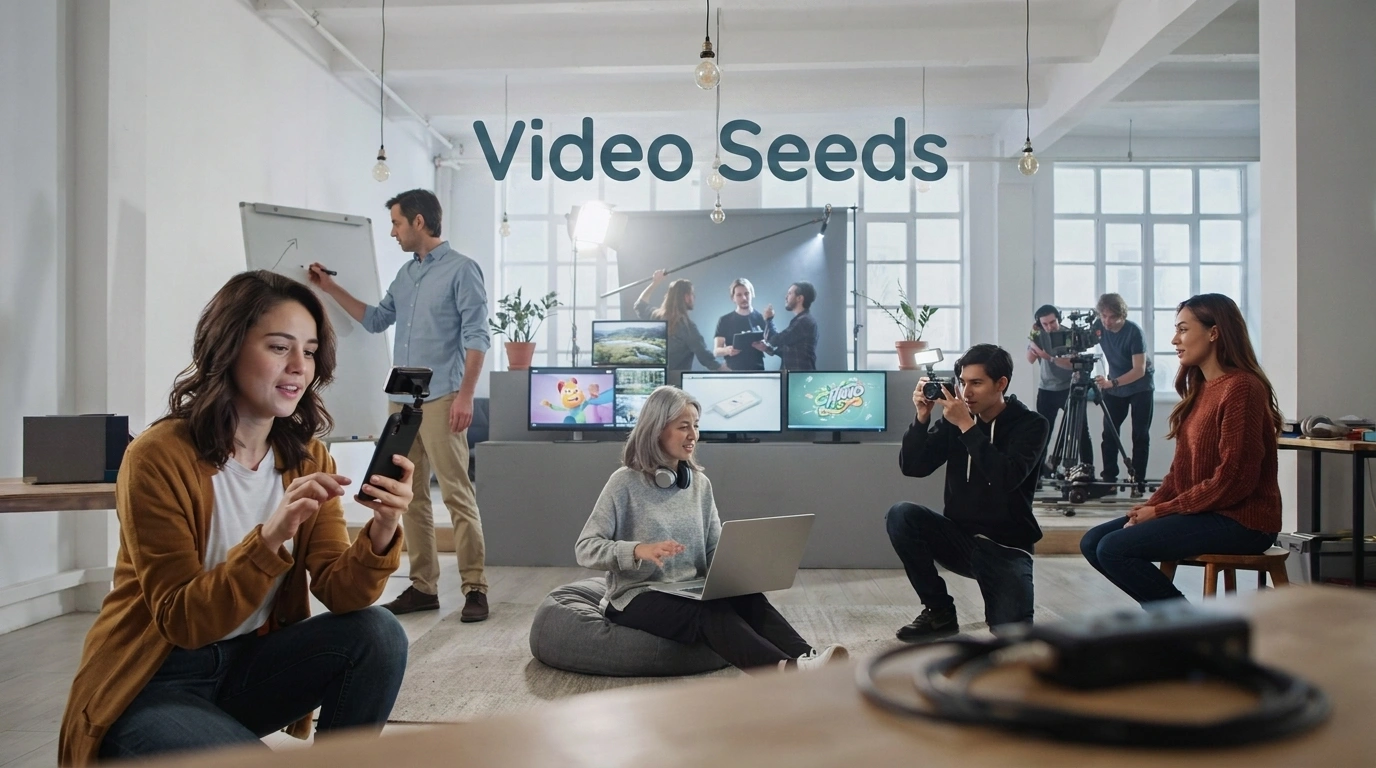
This is a specific continuation of the general Creator’s Guide.
Video may be the most flexible creative medium on this site because it can borrow from almost every other one.
A video can contain writing, photography, illustration, animation, music, narration, interviews, performance, graphics, research, sound design, or combinations of all of them. It can last thirty seconds and communicate one powerful idea, or become a substantial documentary, dramatic production, educational presentation, or other long-form work.
That range is important because creating video does not necessarily mean making a movie.
A Fiction Seed could inspire a sixty-second character monologue filmed on a phone, a narrated slideshow exploring its world, a fake commercial for a product from the story, an animated sequence, or an ambitious short film. An Article could become a whiteboard explainer, interview, documentary, opinion piece, or visual fact-check. A photograph might inspire a short cinematic scene. A What If? could become a fictional newscast from twenty years in the future.
This guide is for filmmakers, YouTubers, animators, video essayists, educators, documentarians, performers, editors, motion-graphics creators, and anyone interested in communicating through moving images.
It isn’t a guide to uploading or publishing a Video Seed. For that, see Create an Inspired Seed. Instead, its purpose is to help answer a much more interesting question:
What could I make from this Seed using video?
What Can a Video Seed Be?
Don’t let the word “video” make you think immediately about cameras, actors, sets, and complicated production. Some excellent video concepts require those things. Many don’t.
Depending on your interests, skills, equipment, and the idea that inspires you, you could create:
- Short-Form Video: A concise visual response designed around one idea, moment, question, or observation.
- Talking-Head Video: Speak directly to the viewer about your response to a Seed.
- Video Essay: Combine narration, imagery, footage, graphics, and research to explore an idea or argument.
- Whiteboard Video: Explain a concept through narration accompanied by drawings, diagrams, words, or simple visual development.
- Slideshow Presentation: Combine still images, artwork, photographs, graphics, or slides with narration, music, or captions.
- Illustrated Story Video: Tell an original story using illustrations or artwork rather than filmed actors.
- Motion-Graphics Video: Use typography, graphics, diagrams, icons, and animation to communicate an idea visually.
- Animation: Create traditional, digital, stop-motion, 3D, or other animated responses.
- Stop-Motion Video: Animate physical objects, artwork, models, paper, or other materials.
- Screen-Based Presentation: Demonstrate or explain something through recorded visual material when appropriate.
- Tutorial or How-To: Teach viewers how to do something related to the Parent Seed.
- Educational Video: Explain a subject, process, historical event, scientific concept, or other topic.
- Visualized Data Presentation: Turn research, statistics, comparisons, or trends into understandable moving visuals.
- News-Style Report: Present a factual development using the conventions of video journalism.
- Commentary: Give your perspective on an issue or idea.
- Editorial or Opinion Video: Make and support an argument.
- Response Video: Agree, disagree, question, expand upon, or otherwise respond to another Seed.
- Fact-Check: Investigate claims and visually present the evidence.
- Review: Evaluate a creative work, idea, place, experience, technology, or other appropriate subject.
- Interview: Record a conversation with someone whose experience or knowledge relates to the Parent Seed.
- Roundtable or Discussion: Bring several perspectives together.
- Mini-Documentary: Explore a real subject through narration, interviews, footage, photographs, research, and other evidence.
- Full Documentary: Develop the inspiration into a substantial non-fiction production.
- Travel or Location Video: Explore a real place connected to the Parent Seed.
- Visual Tour: Guide viewers through a location, collection, process, environment, or subject.
- Behind-the-Scenes Video: Explore how something is created or accomplished.
- Process Video: Show the creation of artwork, music, writing, an object, or another relevant activity.
- Time-Lapse: Compress a process or changing environment into a visual experience.
- Music Video: Create original visuals inspired by music, with appropriate permission to use the audio.
- Performance Video: Record an original musical, theatrical, spoken-word, dance, or other performance.
- Character Monologue: Have a performer embody an original character inspired by the Parent Seed.
- Dramatic Scene: Create an original fictional scene with one or more performers.
- Short Film: Develop an original story inspired by another Seed.
- Full-Length Fiction Presentation: For creators with the ambition and resources, a Seed could eventually inspire a substantial dramatic production.
- Trailer or Teaser: Create an original trailer for a story, world, concept, or imagined production.
- Commercial: Create an advertisement inspired by the Parent Seed, whether for something real when appropriate or something entirely fictional.
- Public-Service Announcement: Explore a social issue through the conventions of a PSA.
- Fictional News Broadcast: Report events from an imaginary world as though they were breaking news.
- Fictional Documentary: Examine an invented person, event, place, or phenomenon with documentary conventions.
- Fictional Corporate Video: Create training, promotional, recruitment, or informational media from an imagined organization.
- Found-Footage Story: Tell an original story through supposedly discovered recordings.
- Video Diary: Let an original character document what is happening to them.
- Experimental Video: Explore movement, imagery, editing, sound, abstraction, or unconventional storytelling without needing to fit another format.
And there are countless hybrids between them.
The important point is that production scale is not a measure of creative value. A thoughtful sixty-second video made with narration and five still images may provide a more interesting response to a Seed than a twenty-minute production requiring weeks of work.
Choose the format that serves the idea.
A Note About Using Someone Else’s Work
Video makes it especially easy to reproduce another creator’s work, so there is an important distinction between responding to a Parent Seed and republishing it in another format.
If another member has written a story, article, poem, or other written Seed, don’t simply create a video that reads or displays the entire work exactly as written unless you have the creator’s written approval or otherwise have the necessary rights.
The same principle applies to someone else’s music, photography, artwork, audio, or video. Creating a Video Seed does not automatically give you permission to reproduce another creator’s complete work inside it.
A short excerpt may be appropriate when used as part of a genuinely new response, such as discussing a passage in a video essay, reviewing an artwork, or briefly establishing what inspired your contribution. The Parent Seed itself will already be connected to your Seed through the site’s genealogy, so you generally don’t need to reproduce it in full to establish that relationship.
When in doubt, create something new.
Instead of filming yourself reading an entire story, dramatize one new scene it inspired. Instead of displaying an artist’s work throughout your video, discuss the idea it gave you. Instead of reposting another creator’s video, make your own response to it.
Inspiration should lead forward.
If the Parent Seed Is Fiction
Fiction gives video creators characters, worlds, scenes, conflicts, objects, themes, and unanswered questions, but you don’t need a film-production budget to respond to them.
You could create:
- A trailer for the story.
- A teaser based on one idea.
- A dramatic adaptation of a short excerpt with appropriate permission.
- An original scene occurring before the story.
- An original scene occurring afterward.
- A missing scene.
- A character monologue.
- A video diary recorded by a character.
- A conversation between two characters.
- A short film about a minor character.
- A story occurring elsewhere in the fictional world.
- A fictional newscast reporting an event from the story.
- A documentary produced years after the fictional events.
- A television commercial for a product in the story.
- A tourism advertisement for its world.
- A political campaign commercial from within the fictional society.
- A propaganda film created by one of its organizations.
- A public-service announcement that might exist there.
- A corporate training video from a fictional company.
- An educational film made for children living in that world.
- A video essay discussing the story’s themes.
- A review.
- An examination of its characters.
- A scientific analysis of its premise.
- A fact-versus-fiction examination.
- A slideshow exploring the fictional world through original imagery.
- An illustrated or animated interpretation.
- A whiteboard explanation of a complicated idea from the story.
- A visual timeline.
- A map-based presentation of the events.
- A mock interview with a character.
- A “where are they now?” presentation set years later.
- A short film inspired by one unanswered question rather than the main plot.
Don’t begin by asking, “How could I film this story?”
Ask, “What video could exist because I experienced this story?”
If the Parent Seed Is an Article
An Article Seed can become the beginning of journalism, education, commentary, documentary, visualization, or even fiction.
You could create:
- A video essay.
- A short explainer.
- A whiteboard explanation.
- A narrated slideshow.
- A news-style report.
- A factual update.
- A fact-check.
- A respectful disagreement.
- A supporting argument.
- An opinion video.
- An editorial.
- An interview with an expert.
- A street-interview piece where appropriate.
- A roundtable discussion.
- A mini-documentary.
- A full documentary.
- A historical timeline.
- A data visualization.
- A comparison presentation.
- A pros-and-cons video.
- A beginner’s guide.
- A tutorial.
- A myth-versus-fact presentation.
- A case study.
- A visual summary.
- A location report.
- A demonstration of something discussed in the article.
- A video showing its real-world consequences.
- A fictional commercial inspired by its subject.
- A satirical video.
- A fictional future news report showing where the idea could lead.
- A dramatic scene putting the issue into human terms.
As with non-fiction writing, disagreement can be inspiration. The goal is not to echo the Parent Seed but to contribute something meaningful because you encountered it.
If the Parent Seed Is Imagery
A single image can become the first frame of something much larger.
You could create:
- A short video imagining what happened before the image.
- What happens immediately afterward.
- A dramatic scene inspired by it.
- An animated version of the concept.
- A motion-graphics interpretation.
- A character monologue inspired by someone depicted.
- A fictional interview with that character.
- A trailer for the imaginary story behind the artwork.
- A music video inspired by its mood.
- A visual poem.
- A slideshow exploring related ideas.
- A video essay about the subject.
- A critique or appreciation.
- A documentary about something represented in the artwork.
- A tutorial inspired by its artistic technique.
- A process video showing your own new response being created.
- A fictional commercial using its central idea.
- A video that recreates the mood using completely original imagery.
- A short abstract film translating its shapes, colors, movement, or emotion into time and motion.
The Parent Seed gives you a still moment.
Video allows you to ask what happens when time starts moving again.
If the Parent Seed Is Photography
A photograph can inspire documentary work, fictional storytelling, exploration of place, or an entirely new visual interpretation.
You could create:
- A video tour of the location when reasonably accessible.
- A mini-documentary about the place.
- A historical presentation about what happened there.
- A then-and-now comparison.
- A travel guide.
- A nature or wildlife video inspired by the subject.
- An architectural exploration.
- A video essay about what the photograph communicates.
- An interview related to the subject.
- A short fictional scene inspired by the photograph.
- A character story about someone pictured.
- An imagined story about someone outside the frame.
- A slideshow using your own related photographs.
- A video examining one small detail.
- A time-lapse exploring a similar environment.
- A cinematic sequence capturing the same mood.
- A factual investigation into something the photograph made you curious about.
- A video asking what assumptions viewers make from a single image.
You don’t need access to the original location. If you cannot reasonably go there, follow the idea somewhere you can.
If the Parent Seed Is Poetry
Poetry can become movement, imagery, performance, interpretation, education, or storytelling.
You could create:
- A performance of your own original response poem.
- A short visual interpretation of the poem.
- A music-and-image response.
- An animated interpretation.
- A visual poem.
- A dance or movement piece.
- A character monologue inspired by its narrator.
- A dramatic scene inspired by one metaphor.
- A video essay about its themes.
- A critique or appreciation.
- An educational explanation of its form or technique.
- A slideshow based on its imagery.
- A short film capturing the same emotion without recreating its content.
- A documentary exploring a real subject mentioned in the poem.
- A new story inspired by one line or image.
- A brief performed excerpt incorporated into a larger original response when appropriate.
The goal isn’t necessarily to put pictures behind someone else’s poem.
Ask what new experience the poem makes you want to create.
If the Parent Seed Is Audio
Audio gives video creators something powerful: the experience already exists in time, but the visual world is still yours to imagine.
You could create:
- A music video with appropriate permission to use the music.
- An original visualizer.
- An animated interpretation.
- A narrative video inspired by the audio.
- A short film inspired by its mood.
- A visual story that deliberately contrasts with the sound.
- A performance video.
- A documentary about the subject of a podcast.
- A video essay responding to an audio essay.
- A fact-check of factual claims.
- An interview expanding upon its subject.
- A visual explanation of something described.
- A whiteboard presentation.
- A slideshow using original or properly licensed imagery.
- A video showing how you created your own audio response.
- A visual interpretation of a soundscape.
- A fictional scene inspired by something heard in the recording.
If you don’t have permission to use the Parent Seed’s complete audio, don’t simply place it beneath your new visuals and call the result a new work. Use an appropriate short excerpt when justified or create new audio and video inspired by the original.
If the Parent Seed Is Video
Another video doesn’t require another video in the same style.
You could create:
- A response video.
- A review.
- A critique.
- A fact-check.
- A commentary.
- A counterargument.
- A supporting argument.
- A sequel to an original fictional idea.
- A prequel.
- A new scene inspired by one moment.
- A character response.
- A parody or satire where appropriate.
- A documentary expanding upon a factual subject.
- An interview.
- A whiteboard explanation of a difficult concept.
- A visual timeline.
- A shorter explanation for beginners.
- A deeper long-form presentation.
- A behind-the-scenes exploration of a similar creative process.
- A completely different video format exploring the same idea.
- A response to one small detail rather than the entire Parent Seed.
Don’t simply repost or substantially reproduce another creator’s video without permission. Respond to it. Question it. Extend it. Transform the inspiration into something of your own.
If the Parent Seed Is a What If?
A What If? can become almost any kind of video because it gives you a premise without dictating the presentation.
You could create:
- A thirty-second visual answer.
- A short dramatic scene.
- A full short film.
- An animated interpretation.
- A whiteboard explanation of whether it could happen.
- A scientific explainer.
- A video essay about its consequences.
- A fictional breaking-news report announcing that it happened.
- A documentary made fifty years afterward.
- A commercial for a product created because of it.
- A political advertisement from the imagined future.
- A public-service announcement.
- A corporate training video.
- A government information film.
- A school lesson from the future.
- A video diary from someone experiencing the change.
- A fictional social-media influencer living in that world.
- A tourism commercial.
- A recruitment video.
- A protest video.
- A historical retrospective from generations later.
- A mock interview with the person responsible.
- A debate between people who support and oppose the change.
- A visual timeline of how the world gets from today to that future.
- A factual “How close are we?” investigation.
- A best-case scenario.
- A worst-case scenario.
- A humorous everyday consequence.
- A documentary about the real technologies or social changes already pointing in that direction.
The What If? supplies the premise.
You decide whether the camera belongs to a filmmaker, journalist, scientist, advertiser, teacher, activist, historian, comedian, or someone who actually lives inside the imagined world.
If the Parent Seed Is Other
If the Seed doesn’t fit neatly into one category, don’t begin by worrying about the format.
Begin with your reaction.
Did it make you want to explain something? Make an explainer. Did it make you laugh? Consider comedy or satire. Did you disagree? Make a thoughtful response. Did it create a world in your imagination? Tell us something about that world. Did it make you curious? Investigate. Did it remind you of somewhere? Show us the place. Did it make you want to talk with someone? Conduct an interview.
Then choose the simplest video form capable of communicating your idea.
That might be you speaking into a camera.
It might also be animation, a slideshow, documentary, performance, whiteboard, commercial, short film, or a format nobody on the site has tried yet.
Use These Ideas as Starting Points
Video creators should especially explore the other Creator Guides because almost every creative form can become an ingredient in video.
The Fiction Writer’s Guide contains ideas for characters, worlds, alternative perspectives, fictional documents, and unexplored events that can become dramatic video. The Non-Fiction Writer’s Guide provides approaches for journalism, research, education, criticism, fact-checking, opinion, and explanation. The Artist’s Guide can suggest imagery, concept art, maps, posters, characters, and visual worlds. The Photographer’s Guide can help you think about locations, framing, light, documentary observation, and finding extraordinary images in ordinary places. The Musician & Audio Creator’s Guide can suggest scores, narration, soundscapes, dialogue, Foley, and fictional broadcasts.
You don’t need to master all those disciplines yourself. You can keep the production simple, use the skills you already have, learn something new, or collaborate with other creators.
And remember: the format should serve the idea, not intimidate you away from creating it.
A smartphone, your voice, and a good idea may be enough.
Looking Forward
As the community develops, future Creative Accomplishments could encourage video creators to experiment with formats they haven’t tried before: a first whiteboard video, animation, interview, video essay, documentary, fictional commercial, dramatic scene, visual response, educational presentation, cross-discipline collaboration, or Video Seed inspired by each of the different Parent Seed Types.
Milestone badges could recognize sustained Video contributions as well as particular kinds of creative exploration. These ideas are intended for future development, and creators themselves will inevitably invent formats and combinations we haven’t thought of yet.
For now, when a Seed inspires you, don’t immediately ask:
“Could I make a film out of this?”
Ask the much broader question:
“What could I show someone?”
The answer might take thirty seconds.
Or it might become your next major project.