About This Seed
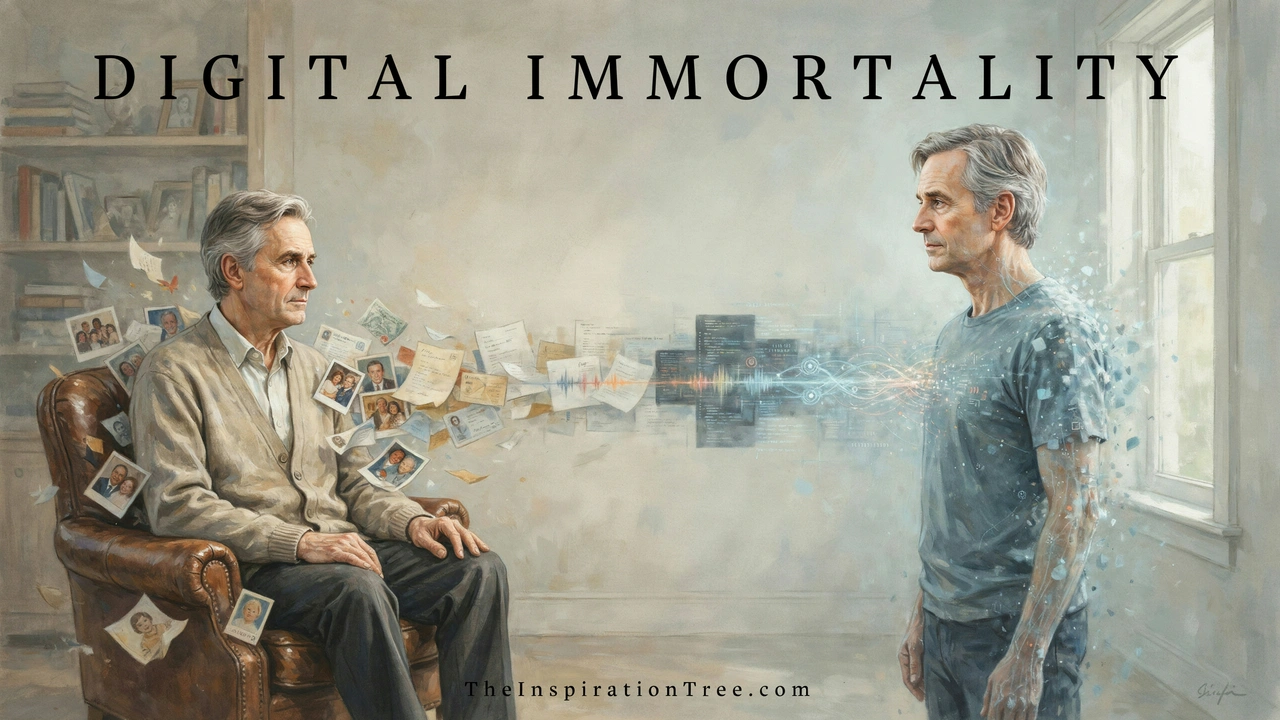
Digital Immortality was inspired by How I Picture It in My Mind, which made me wonder how far the idea of preserving ourselves digitally has already moved from fiction toward reality.
While researching it, I discovered something more interesting than traditional mind uploading. We are already creating enormous archives of ourselves. AI can increasingly learn from those archives, while brain-computer interfaces are beginning to translate limited neural activity directly into digital information. What happens if those technologies eventually converge?
There are countless directions to take that idea.
A writer might imagine someone inheriting a digital parent, a family fighting over whether a deceased relative's AI should be deleted, or a digital copy refusing to continue impersonating the person it was created from. What happens when multiple copies exist, or when a digital version accumulates decades of experiences the original person never had?
An artist could explore the boundary between biological and digital identity, visualize a lifetime becoming data, or imagine memories being reconstructed into a new consciousness. A filmmaker or audio creator could approach the idea through family drama, science fiction, documentary, mystery, romance, or horror.
Nonfiction creators could explore brain-computer interfaces, consciousness, neuroscience, digital legacy, privacy, AI personhood, inheritance, ownership or the legal rights of digital beings.
And perhaps the most interesting question has nothing to do with immortality at all.
If a digital copy continues learning, remembering, and changing after the original person dies, when does it stop being a copy and start becoming someone?